
Refraction and Screening Technology Brings Vision Care to Underserved Communities
For many patients, accessing routine vision care is less about need and more about feasibility. Lack of insurance, limited transportation, and inflexible work schedules often push eye exams and preventative vision screening to the bottom of the priority list, especially when no immediate symptoms are present.
Jesse Devlyn, CEO of Zoom Vision, says these barriers are exactly why on-demand vision care is so effective, particularly in underserved communities. “When we meet people where they already are and say, ‘We can do the eye exam and vision screening for you right here,’ they’re ready to move forward,” Devlyn says. “That’s why we’ve been so effective at turning everyday foot traffic into completed eye exams.”
In Houston, Zoom Vision operates a standalone eye care kiosk inside a grocery store, offering immediate access to eye exams and diagnostic screening for people who might otherwise go without it. Many patients lack vision insurance, reliable transportation, or jobs that allow them to take time off during the workday without losing income.
Before shifting to its current model, the company relied on an on-site doctor but saw limited success. “It was really hard to get people to come back for a scheduled appointment,” Devlyn explains. “We were seeing a 60 to 70 percent no-show rate. Once we introduced asynchronous eye exams supported by comprehensive screening technology, we went from about two exams per day to seven. That’s the power of convenience—when we tell people we can see them right now, they say, ‘Let’s do it.”
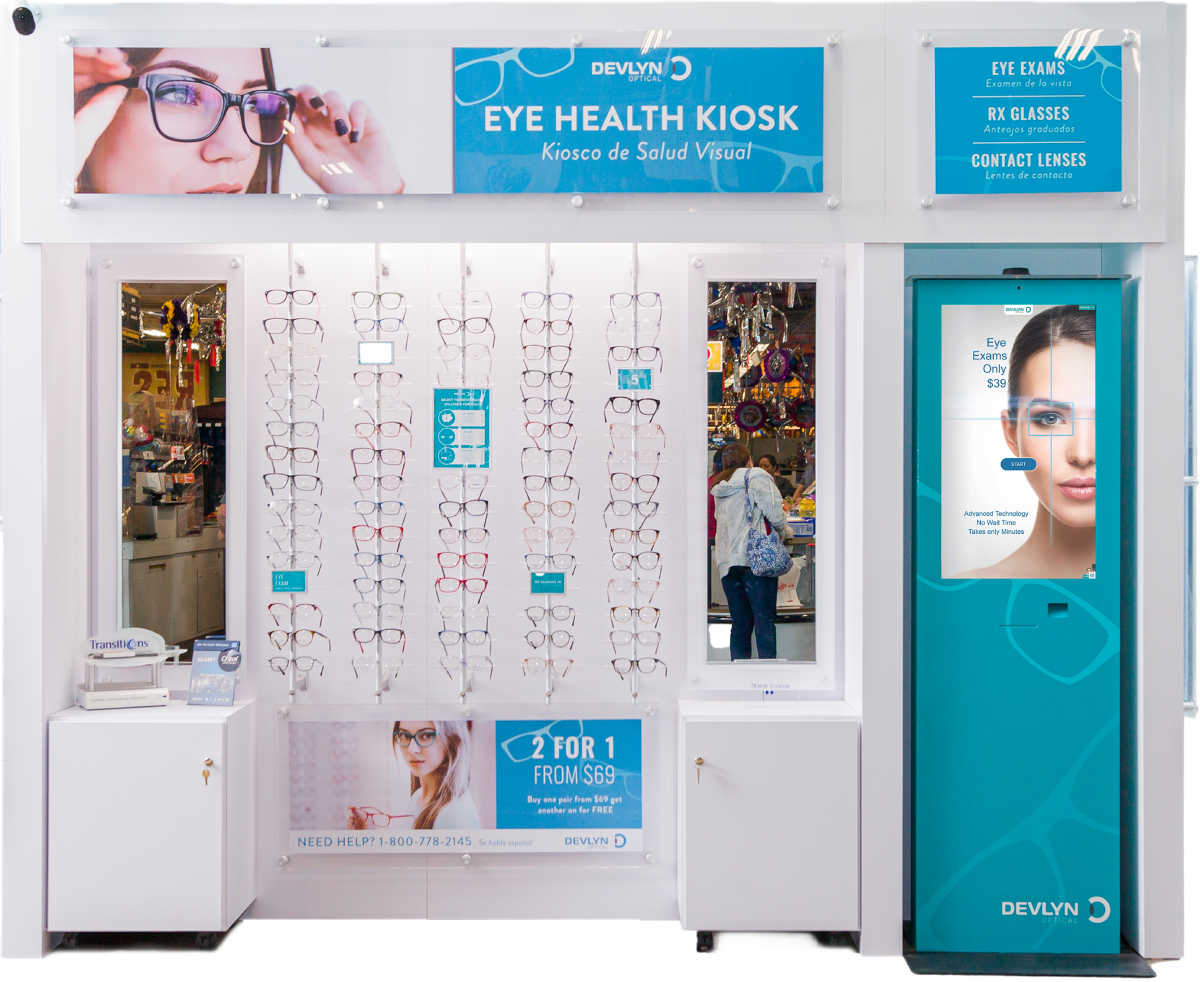
The Zoom Vision kiosk makes full eye exams and vision screening available in convenient, high-traffic locations.
How the Asynchronous Telehealth Works
At the kiosk, an on-site or remote technician captures high-quality clinical data, including retinal imaging and ocular screening measurements. That information is securely uploaded for review by a licensed eye care professional, often the same day.
“This is not a self-refraction,” Devlyn emphasizes. “Many services on the market are self-guided, but they’re not as reliable or robust. Here, we have an experienced technician capturing comprehensive clinical data.”
Remote-ready Equipment in Use
Zoom Vision utilizes Visionix’s Eye Refract, a computer algorithm–guided, open-field binocular wavefront refraction system, along with the Visionix VX 650 all-in-one diagnostic screener and the company’s Nexus cloud-based platform for remote viewing.
The VX 650 enables fast, automated screening for key ocular health indicators—such as tonometry, pachymetry, retinal imaging, and anterior segment evaluation—allowing potential eye disease to be identified even before symptoms are reported.
Devlyn began searching for equipment capable of supporting remote eye exams and screening, particularly in the wake of the pandemic. “We realized we needed devices that would allow us to conduct eye exams without a doctor on site,” he says. “When I came across Eye Refract, I immediately saw the potential. It was the perfect instrument for remote exams. When paired with the VX 650, we could also perform high-quality screening and triage patients appropriately. I’ve been extremely satisfied with the technology and with how Nexus Cloud allows us to manage clinical data captured at the kiosk.”
Operational Details
Zoom Vision charges $39 for an eye exam that includes both refraction and clinical screening. The Houston kiosk averages about seven exams per day and operates seven days a week. It has been in continuous operation for two years.
Patients can also purchase eyewear at the kiosk. They may try on frames in person or use kiosk technology to view available frames in alternate colors, though only one color is physically stocked on site. Once the remote doctor approves the prescription, the order is sent to the lab. Finished glasses are shipped back to the kiosk for dispensing.
At the end of each day, a remote doctor reviews all clinical data and issues spectacle prescriptions when appropriate. Screening data from the VX 650 helps identify patients who require additional care. If conditions such as diabetic retinopathy, cataracts, or other ocular issues are identified, patients are referred to an in-person optometrist or ophthalmologist for care instead of, or in addition to, receiving a prescription.
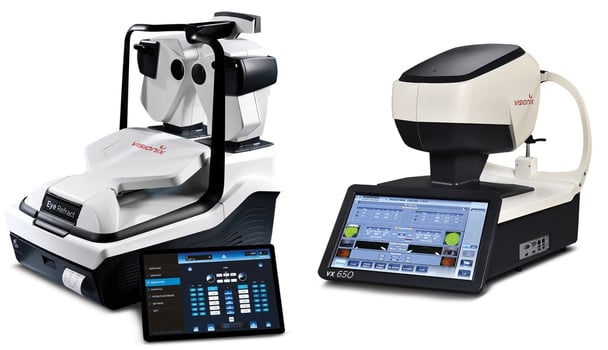 The Zoom Vision kiosk features Visionix’s Eye Refract and the VX 650 diagnostic screener, enabling remote refraction, screening, and asynchronous telehealth eye exams.
Looking Ahead - And Back
The Houston kiosk currently serves as a pilot location as Zoom Vision continues to refine and automate workflows, including clinical data capture, cloud uploads, and the integration of finalized prescriptions into lab orders. The company plans to expand further in Houston and into other Texas markets, including San Antonio, Austin, and Dallas. Devlyn’s deep roots in the optical industry span generations - his grandfather founded Devlyn Optical, which has grown into a network of more than 600 locations across Mexico.
“The business model there is very different from the U.S.,” he says. “In Mexico, the eye exam is not charged separately, it’s simply part of the eyewear purchasing process.” That experience has played a significant role in shaping Zoom Vision’s approach, particularly in serving the large and growing Hispanic population in the United States.
“We understand the demographics and how to serve them well,” Devlyn says. “We tested traditional models, referral-based care, and approaches without an on-site doctor, but none of them worked effectively for this community.” Zoom Vision’s asynchronous eye exam model —supported by fast, automated screening—mirrors the convenience many Hispanic patients are accustomed to in their home countries.
“Convenience and affordability are essential,” Devlyn says. “They allow us to address a need that the traditional model doesn’t fit. We’re able to bridge that gap and serve communities that have historically been underserved. Everyone deserves good vision. Everyone deserves the opportunity to be productive at work and succeed in school.”
As Zoom Vision continues to refine and expand its kiosk-based approach, its early success reflects a broader shift in how eye care can be delivered. By prioritizing immediacy, affordability, and cultural familiarity, the company demonstrates how technology-enabled solutions—powered by tools like Eye Refract and the VX 650—can do more than streamline exams. They can meaningfully expand access to vision care for communities that have long gone without it.
JESSE DEVLYN, MBA
Jesse Devlyn, MBA, is Founder and CEO of Zoom Vision, a health‑tech company making vision care affordable and accessible for underserved communities in the U.S. With 20+ years in strategy, product development, and go‑to-market leadership, Jesse builds innovative solutions that break down barriers to eye care. His family’s legacy in the optical industry dates back to his grandfather, Dr. Frank J. Devlyn, founder of Devlyn Optical, now a network of 600+ locations in Mexico. Since 2020, Jesse has led Zoom Vision to deliver telemedicine-enabled eye exams and eyewear directly to those who need it most.
This article originally appeared on ODwire.org in January 2026: https://www.odwire.org/community/threads/refraction-and-screening-technology-brings-vision-care-to-underserved-communities.173781/
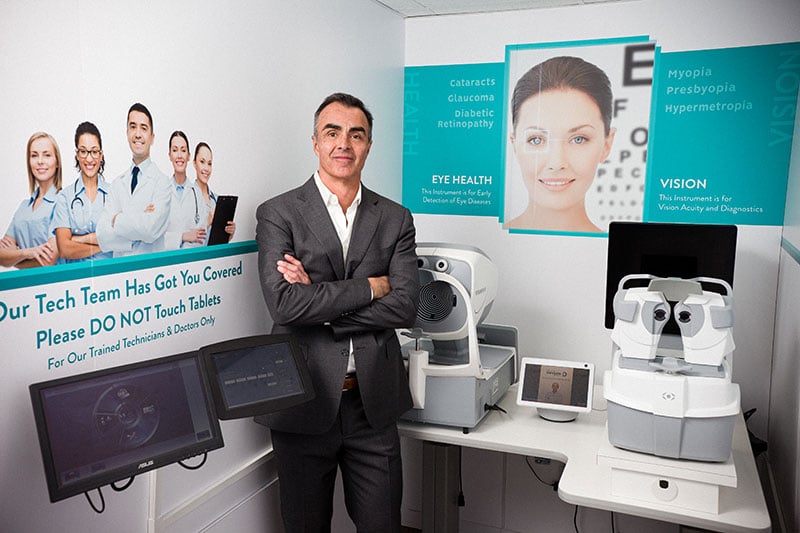
*The instruments shown in the first image above represent a previous generation of Eye Refract and VX 650. The product casing has since been updated and a new logo has been added; however, the functionality remains unchanged.
**Medical procedures, case studies, and practices mentioned in this content may vary based on regional standards, local regulations, and the discretion of providing healthcare professional. What may be considered appropriate and ethical in one country may differ in another.