
Boosting Practice Efficiency with Visionix Technology: Insights from Dr. Paul Chen
As eye care continues to evolve, practices are under increasing pressure to improve efficiency while maintaining high clinical standards and delivering a strong patient experience. For Paul H. Chen, MD, founder of North County Laser Eye Associates, integrating advanced diagnostic technology has become a strategic priority. With extensive experience in refractive, cataract, and glaucoma care, Dr. Chen approaches innovation with a focus on real-world clinical impact and operational value.
Driving Efficiency with Integrated Technology
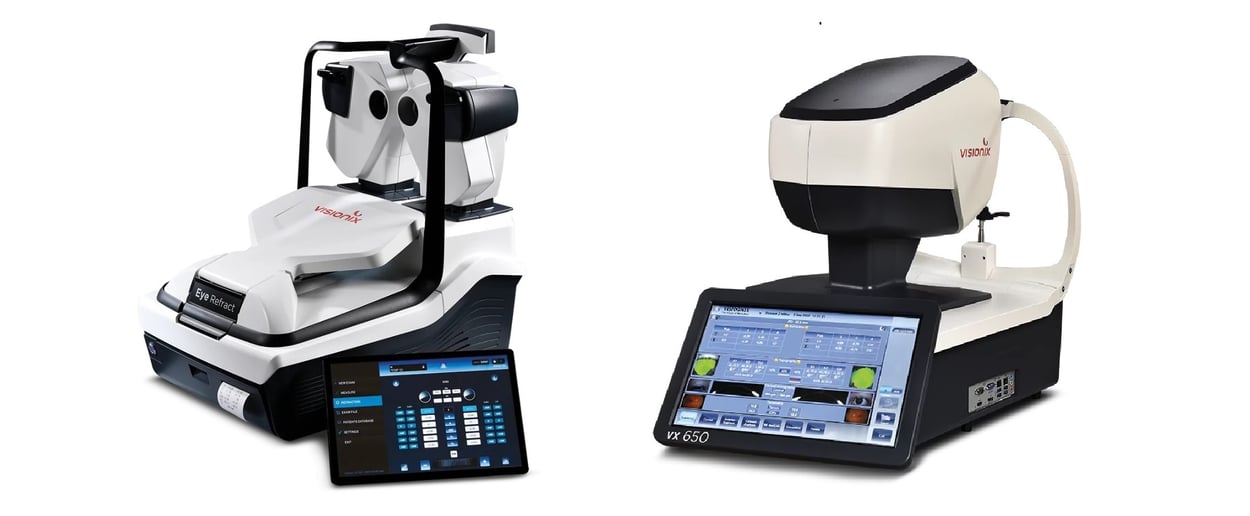
Over the past several years, his practice has implemented technologies from Visionix, USA, including the Eye Refract system and the VX 650 multimodal screener, to streamline workflow and reduce inefficiencies. A key benefit has been the ability to optimize exam lane utilization, as the technology, “frees up an exam room that would otherwise be occupied with a manual refraction.” By consolidating diagnostic steps and empowering technicians to take on a greater role, the practice has created a more efficient and scalable care model.
This efficiency is especially evident in the use of Eye Refract, which has reduced reliance on manual refraction while maintaining accuracy and consistency. The system performs reliably across a wide range of patients, including those who are more challenging to assess, with Dr. Chen noting that “we’re able to capture almost everyone on the Eye Refract system, including patients with tremors or neurological issues.”
At the same time, the VX 650 multimodal screener has enhanced clinical confidence by integrating key diagnostic capabilities into a single platform. With anterior-segment OCT, non-contact tonometry, and pachymetry, the device supports faster and more informed decision-making. For Dr. Chen, one of the most impactful benefits is efficiency in evaluating angle closure, explaining that “the anterior segment on the VX 650 has been very helpful, especially for evaluating angle closure without using a gonioprism.”
Enhancing the Patient Experience and Practice Performance
These improvements extend beyond workflow into the overall patient experience. By reducing movement between devices and providing immediate access to results, the practice creates a more seamless and engaging visit. “Patients see the technology as modern and high-tech; it elevates how they view our practice,” says Dr. Chen. They are also more involved in their care, with Dr. Chen observing that “patients like seeing their results right away on the Nexus web link,” which helps reinforce understanding and trust.
From a business perspective, the return on investment has been driven primarily by operational gains and valuable indirect savings rather than direct revenue. Increased technician productivity, reduced room turnover, and improved workflow efficiency have strengthened the practice’s overall performance. As Dr. Chen explains, “our return on investment is mostly indirect — it’s about efficiency and workflow,” highlighting the growing importance of operational optimization in today’s health care environments.
The Future of Eye Care Efficiency
Dr. Chen’s experience reflects a broader shift toward integrated, efficiency-driven technology that supports both clinical excellence and long-term sustainability. As he notes, “most of the innovation I’ve seen lately has been coming from Visionix,” reinforcing the role of advanced diagnostics in shaping the future of eye care. Practices that embrace this evolution will be better positioned to deliver high-quality care at scale—where improved outcomes, streamlined workflows, and stronger patient experiences all work together.
Standout Features of Eye Refract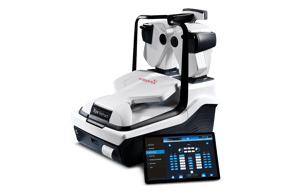
- Computer algorithm guided, open-field binocular wavefront refraction
- Highly accurate and reproducible refractions in around 4 minutes
- Tablet-driven process is intuitive and requires minimal training
- Send Rx results directly to EMR
- Remote-ready
Standout Features of VX 650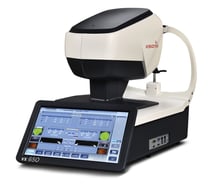
- All-in-one: anterior + retinal imaging
- AR/K, Wavefront, fundus camera, and more
- Fully automated, fast exams
- Ideal for comprehensive diagnostics
- Remote-ready

Dr. Paul H. Chen is a board-certified ophthalmologist who practices at North County Laser Eye Associates in San Diego, California. He provides comprehensive eye care with expertise in LASIK, cataract surgery, glaucoma treatment, and eyelid surgery. He specializes in laser vision correction, including LASIK and ASA (Advanced Surface Ablation), and uses advanced diagnostic and surgical technologies to deliver precise, minimally invasive care. Dr. Chen trained at Harvard Medical School and completed his ophthalmology residency at UCSF Medical Center, with additional research experience at Stanford University. He has been published in multiple scientific studies and holds patents related to rapid diagnostic techniques for infectious diseases.
**Medical procedures, case studies, and practices mentioned in this content may vary based on regional standards, local regulations, and the discretion of providing healthcare professional. What may be considered appropriate and ethical in one country may differ in another.